![[ครบชุด] T2007134_างเราไม เคยย นอย ตรงน น_part 2](https://newsthai.vansonnguyen.com/wp-content/uploads/2026/07/fb_natural_20260721_084351.jpg)
The Twilight of the Lotus Icons: A Look Back at Elise and Exige as the Emira Takes the Stage (Updated to 2026)
Keywords: Lotus Elise Sport 220, Lotus Exige Sport 350, Lotus Emira, Lotus Cars Thailand, Thailand International Motor Show, Lotus Evija, Lotus EV, Thailand car market, premium sports cars Thailand, electric vehicles Thailand, Geely Lotus.
As the automotive world hurtles toward an all-electric future, 2026 stands as a pivotal year. Not only are governments across the globe setting aggressive net-zero targets, but the automotive industry itself is fundamentally transforming its entire lineup. For enthusiasts of high-performance, lightweight sports cars, this shift represents a significant inflection point—a moment where the legendary heritage of pure driving pleasure begins to give way to the silent power of electric innovation.
This transformation is particularly poignant for Lotus Cars. For over 70 years, Lotus has been synonymous with Colin Chapman’s philosophy: “Simplify, then add lightness.” Their Elise and Exige models, the icons of this philosophy, have captivated driving purists with their razor-sharp handling and raw, unfiltered performance. However, even Lotus has had to adapt to the changing tides of consumer demand, environmental regulations, and technological advancements.
While the latest Lotus Emira continues to represent the pinnacle of gasoline-powered engineering from the British marque, the narrative has evolved significantly since its initial launch. This article takes a deep dive into the historical context of the Elise and Exige, their limited-time availability in Thailand, and the ambitious future Lotus has mapped out for the electrified era, all while analyzing the strategic implications for collectors and enthusiasts in the current market.
The Legend of Lotus: A Legacy Built on Lightness
To understand the significance of the Elise and Exige, one must first appreciate the engineering philosophy that birthed them. Colin Chapman founded Lotus in 1948 with a vision that went beyond mere speed; he sought to create cars that were lightweight, agile, and exceptional to drive, regardless of their engine power. This philosophy manifested in a series of groundbreaking designs that pushed the boundaries of automotive engineering and earned Lotus a reputation as a motorsport powerhouse.
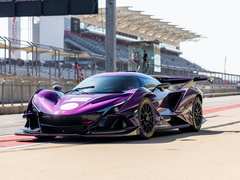
The Elise, first introduced in 1996, was a radical departure from the norm. Instead of relying on heavy steel or aluminum chassis, Lotus developed a revolutionary bonded extruded aluminum chassis structure. This design not only reduced the vehicle’s weight to astonishingly low levels but also provided the structural rigidity needed to handle the demands of high-performance driving. The result was a car that felt incredibly agile, responsive, and pure to drive—a direct line between driver, machine, and road.
Complementing the Elise was the Exige, a more aggressive, track-focused variant that amplified the core tenets of the Elise’s design. With enhanced aerodynamics, more powerful engines, and track-ready suspension, the Exige became a darling of track enthusiasts and collectors alike. It represented the ultimate expression of Lotus’s commitment to lightweight performance, offering a level of driver engagement that few cars could match.
The Twilight Years of the Elise and Exige in Thailand
For fans of traditional British sports cars in Thailand, the period surrounding the late 2021 Motor Expo was a pivotal time. It marked the final opportunity to own these iconic models before they were phased out. This was not merely a refresh of existing models; it was the end of an era for the iconic Elise and Exige lines.
At the 2021 Thailand International Motor Expo, Lotus Cars Thailand, operating under the management of Verus Automotive Co., Ltd., showcased two exceptional models: the Lotus Elise Sport 220 and the Lotus Exige Sport 350. What made this showcase particularly special was that these were the very last units of these beloved vehicles to be offered in the Thai market.
The Lotus Elise Sport 220 stood out for its masterful engineering. Weighing a mere 68 kg for its chassis alone, the Elise Sport 220 utilized a composite aerodynamic body to generate downforce, reducing wind resistance and enhancing stability at high speeds. The heart of this machine was a 1.8-liter, supercharged 4-cylinder engine producing 217 horsepower and 250 Newton-meters of torque. It could accelerate from 0 to 100 km/h in just 4.2 seconds. The car also featured Lotus Dynamic Performance Management (Lotus DPM) and Double Wishbone suspension on all four wheels, ensuring that legendary Lotus handling was at the driver’s command. This model was priced at 5,390,000 Thai Baht and was available in only three units.
The Lotus Exige Sport 350, on the other hand, represented a more extreme iteration of Lotus’s performance prowess. Powered by a 3.5-liter V6 supercharged engine generating 345 horsepower and 400 Newton-meters of torque, it accelerated from 0 to 100 km/h in a breathtaking 3.9 seconds and reached a top speed of 274 km/h. The Exige Sport 350 was also notable as one of the first Lotus models to feature a lightweight aluminum manual gearbox, ensuring precise and rapid gear shifts. This model was limited to three units and was priced at 9,290,000 Thai Baht.
Both models were sold on a “first-come, first-served” basis, catering to serious collectors and passionate driving enthusiasts who understood that these limited-run vehicles were not just cars, but automotive artifacts.
The Arrival of the Lotus Emira: The Gasoline Swan Song
While the Elise and Exige represented the conclusion of a storied chapter, the 2021 Thailand International Motor Expo also heralded the dawn of the next. Lotus officially opened pre-orders for the Lotus Emira, the highly anticipated sports car that was widely regarded as the last gasoline-powered model before the company transitioned to a fully electric lineup.
The Lotus Emira had already gained global attention, achieving remarkable booking numbers worldwide. In Thailand, it was presented in the First Edition variant, powered by a 3.5-liter V6 engine producing 400 horsepower and 430 Newton-meters of torque. It offered a 0-100 km/h acceleration time of 4.2 seconds and a top speed of 288 km/h.
Lotus Car Thailand announced that the Emira V6 First Edition would be available in a strictly limited quantity of only six units, with an initial price starting at 11,900,000 Thai Baht. Interestingly, Lotus did not display a physical Emira at the 2021 expo, relying instead on marketing materials to build excitement. The Lotus Evija, their all-electric hypercar with over 2,000 horsepower, was also mentioned but was not the focus of this particular event in Thailand.
The Transition to Electric: A New Horizon for Lotus
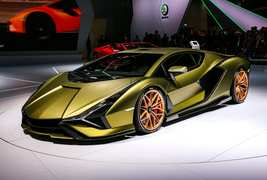
The launch of the Emira was not just a product introduction; it was a strategic announcement about the future direction of Lotus. In response to global trends toward electrification and sustainability, Lotus unveiled an ambitious roadmap to develop four new electric lifestyle models over the next five years. This aggressive expansion aimed to solidify Lotus’s position in the premium automotive market.
The lineup included:
Type 132: An E-segment SUV (set for launch in 2023).
Type 133: An E-segment 4-door coupe (set for launch in 2024).
Type 134: A D-segment SUV (set for launch in 2025).
Type 135: A Sport Coupe (set for launch in 2026).
This strategy demonstrated Lotus’s commitment to embracing the electric revolution while remaining true to its core DNA of performance and driving dynamics. However, the transition has been a complex undertaking. The Lotus Emira serves as the bridge—a technological marvel that combines traditional driving experiences with cutting-edge engineering.
The Business Strategy Behind Lotus in Thailand
The foray of Verus Automotive into the Thai automotive market with Lotus Cars was a calculated move. As a major dealer for Volvo Cars, Verus already had a strong foundation in the premium segment. By taking over the Lotus dealership, they expanded their portfolio into the niche luxury sports car category.
The Lotus dealership and service center were strategically located on Ramkhamhaeng Road, near the Airport Link Ramkhamhaeng Station. This location offered accessibility for customers in Bangkok, along with a capacity to handle service requests and ensure after-sales support. The decision to establish a dedicated facility underscored Lotus’s commitment to the Thai market, positioning the brand to capitalize on the growth of the luxury automotive segment in the region.
For Lotus, Thailand represents a significant market in Asia, second only to Hong Kong and Singapore. The company’s strategy has always been to build brand presence, engage enthusiasts, and pave the way for new, technologically advanced models. While the initial launch focused on limited-edition gasoline sports cars, the long-term vision has always been to transition towards sustainable, electric mobility.
The Future of Lotus in the Age of EV: What You Should Know in 2026
In 2026, the landscape of premium sports cars in Thailand is markedly different from even just five years ago. The transition to electric vehicles is no longer a distant concept; it is a present reality. For enthusiasts considering purchasing a Lotus today, understanding the implications of this shift is crucial.
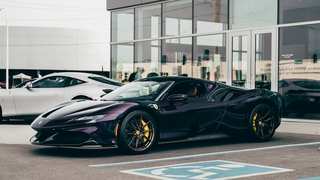
The Evolution of the Emira: