
The Masterpieces of Pagani: A Comprehensive Guide to the Most Exclusive Supercars in the World
Introduction
In the rarefied air of automotive haute couture, few names command the reverence and awe that Pagani does. Far more than just a manufacturer of supercars, Pagani is an artisanal workshop where the philosophy of design, engineering, and raw performance converges to create mobile works of art. For over three decades, the Italian marque has defined the pinnacle of exclusivity, producing limited-edition machines that are whispered about in hushed tones by enthusiasts and collectors.
This article serves as an authoritative guide to the world of Pagani automobiles, specifically focusing on the most exclusive and jaw-dropping models that have graced the asphalt. Unlike typical car reviews, this analysis delves into the unique DNA of each Pagani, exploring the philosophy behind their creation, the technological mastery of Horacio Pagani, and the sheer visceral experience of these hypercars.
While a Pagani is the epitome of desire for many, it is crucial to understand that owning one is not merely a financial transaction; it is an acquisition of art. From the early days of the Zonda series to the revolutionary Utopia, each Pagani represents a statement of exclusivity, precision, and a rejection of mass-market automotive norms. This comprehensive overview will explore the lineage of Pagani and provide an insider’s perspective on what makes these cars so coveted.
The Legacy of Horacio Pagani: Where Art Meets Engineering
The story of Pagani Automobili S.p.A. is inextricably linked to the vision of its founder, Horacio Pagani. Born in Argentina, Pagani’s fascination with automotive mechanics began at a young age, leading him to pursue formal studies in engineering. His early career saw him working at Lamborghini, where his talent for advanced materials and aerodynamic design quickly became apparent.
Pagani’s journey did not follow the conventional automotive path. He was always pushing the boundaries of what was considered possible, driven by an insatiable curiosity to merge technology with aesthetics. In 1992, Pagani made the audacious move to establish his own company, Pagani Automobili S.p.A., with the ambition to build not just fast cars, but visceral experiences that redefined the relationship between driver and machine.
His first major breakthrough came with the Pagani Zonda C12, a car that captured the imagination of the automotive world. It was a car born from a vision: a high-performance machine that eschewed digital aids in favor of analog precision and mechanical purity. Pagani’s commitment to detail was evident from the outset, as he insisted on using Mercedes-AMG V12 engines, known for their reliability and raw power.
What sets Pagani apart is its founder’s philosophy. Horacio Pagani sees himself as more of a craftsman than a factory owner. He oversees every detail of his creations, from the initial sketch to the final polish. This hands-on approach, combined with his deep understanding of materials science and aerodynamics, ensures that every Pagani is a testament to his personal obsession with perfection. This commitment to art in engineering is the foundation upon which the brand’s legendary status is built.
The Pagani Zonda Series: The Apex of Exclusivity
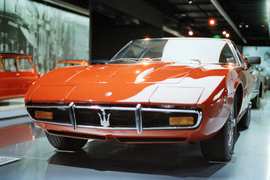
The Pagani Zonda series is perhaps the most iconic and sought-after lineage in the Pagani history. Since its inception, the Zonda has evolved through numerous iterations, each pushing the boundaries of performance and design even further. It is a series defined by its scarcity and the absolute obsession to detail.
Pagani Zonda C12 (1999-2002)
The Pagani Zonda C12 was the genesis of this legend. Introduced at the Geneva Motor Show in 1999, it marked the brand’s official entry into the elite world of hypercars. Unlike anything else on the market, the Zonda C12 was a pure driving machine. Its design was a radical departure from the angular shapes of its competitors, featuring organic lines and a stunning carbon fiber monocoque chassis.
Power came from a Mercedes-Benz M120 6.0-liter V12 engine, producing around 400 horsepower. While this might seem modest by today’s standards, the Zonda’s feather-light carbon-titanium chassis ensured a visceral and engaging driving experience. The Pagani Zonda immediately established itself as a collector’s item, with production limited to a handful of units, each bespoke to the owner’s preferences.
Pagani Zonda S (2002-2005)
Following the success of the C12, Pagani introduced the Zonda S. This evolution saw significant enhancements to both performance and aesthetics. The engine was upgraded to a larger 7.3-liter AMG V12, producing closer to 555 horsepower, further increasing the Zonda’s speed capabilities. The exterior design was refined with subtle changes, while the interior remained a masterpiece of exposed carbon fiber and hand-stitched leather.
The Zonda S cemented Pagani’s reputation as a maker of uncompromising hypercars. Each car was essentially bespoke, with buyers given the option to tailor the specifications to their exact needs. This level of customization is what makes the Zonda so unique; no two cars are exactly alike.
Pagani Zonda F (2005-2009)
The Pagani Zonda F, named after the legendary Formula 1 driver Juan Manuel Fangio, was a significant step up in performance and aerodynamics. Powered by an even more powerful AMG V12, output reached 600 horsepower, while the car’s weight was drastically reduced through the extensive use of carbon fiber. The Zonda F was also the first Pagani to be tested on the Nürburgring, setting a blistering lap time that confirmed its status as one of the fastest cars in the world at the time.
Pagani Zonda Revolución (2013-2014)
The Pagani Zonda Revolución represents the absolute pinnacle of the Zonda series. Produced in extremely limited quantities, this Zonda is a track-focused hypercar that bridges the gap between road-legal GT cars and pure racing machines.
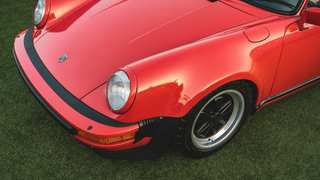
With only five units ever produced worldwide, the Zonda Revolución is the epitome of automotive exclusivity. The engine is a beast, delivering a staggering 800 horsepower from its 6.0-liter AMG V12. The power is managed through a sequential racing transmission, ensuring lightning-fast shifts that make the Zonda Revolución even more thrilling to drive.
The Revolución’s design is a work of art in itself. It features advanced aerodynamic elements, including a massive carbon fiber rear wing and an aggressive diffuser, all contributing to its incredible grip and downforce. The car’s exterior is a study in carbon fiber craftsmanship, with intricate weave patterns that make it visually stunning.
In terms of performance, the Zonda Revolución can accelerate from 0 to 62 mph in just 2.6 seconds. Its top speed exceeds 220 mph, making it a truly formidable machine. The braking system utilizes Brembo CCM-R carbon ceramic brakes with massive discs, providing incredible stopping power to match the engine’s performance.
The Pagani Zonda Revolución is a collector’s dream. With only five units built and most already sold, finding one today is virtually impossible. Its exclusivity and track-focused nature have made it one of the most valuable and sought-after Pagani models ever made.
The Pagani Huayra: The Mechanical Masterpiece
Following the Zonda series, Pagani introduced the Huayra. The Huayra was designed to be the spiritual successor to the Zonda, but with a completely fresh approach to design and technology. Named after the Quechua wind god, the Huayra represents a new era of performance and sophistication for Pagani.
Pagani Huayra BC (2016-2017)
The Pagani Huayra BC is a tribute to Benny Caiola, a long-time friend and collector of Pagani cars. This limited-edition Huayra is lighter, more powerful, and more aerodynamically advanced than the standard Huayra.
The Huayra BC is powered by a 6.0-liter twin-turbocharged Mercedes-AMG V12 engine, producing 750 horsepower. This massive power surge is delivered to the rear wheels through a 7-speed sequential transmission, resulting in mind-bending acceleration.
What sets the Huayra BC apart is its extreme focus on weight reduction. The car features extensive use of carbon-titanium composites and Carbo-Triax HP52 carbon fiber, bringing the curb weight down to just 1,218 kg. This incredible strength-to-weight ratio ensures that the Huayra BC is both incredibly fast and responsive.
The exterior design is a work of art, with intricate aerodynamic elements that enhance downforce and stability. The car features a massive rear wing, aggressive diffusers, and active aerodynamic flaps that adjust in real-time to optimize performance. The interior is equally stunning, with hand-crafted leather and exposed carbon fiber, creating a luxurious and cockpit-like feel.
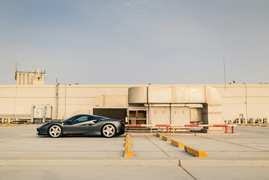
The